
I signed up for a whale-watching excursion out of Port Angeles expecting patience to be the main requirement. Gray water, long stretches of scanning the horizon, maybe a distant spout if luck was on our side. Olympic National Park has a way of rewarding restraint, and I was ready for a quiet day on the Strait of Juan de Fuca. What I wasn’t prepared for was how long the ocean would ask us to watch.
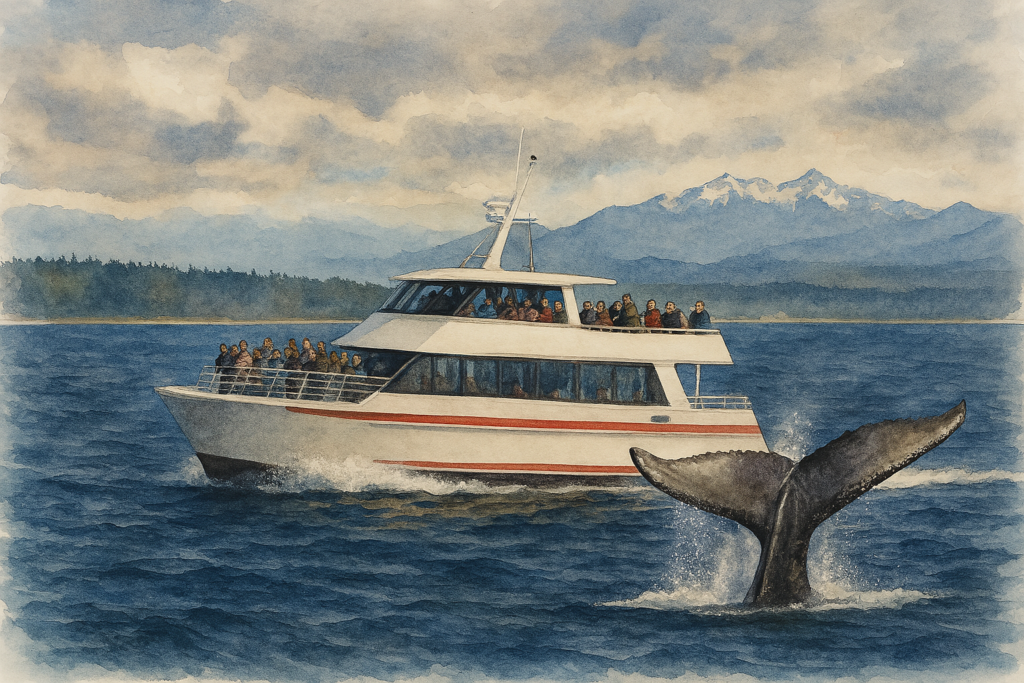
We launched from the Port Angeles wharf on a Puget Sound Express half-day tour, the boat cutting steadily through cold Pacific swells. Even in September, the wind carried a sharp edge, and I was glad for wool layers and a solid jacket. The vessel had a heated cabin, open viewing decks, restrooms, and naturalists who pointed out harbor seals, bald eagles, and sea stacks as we moved west along the coast. The trip runs about three to four hours, long enough to settle into the rhythm of the water without feeling rushed.
For the first hour, the sea was calm in that moody Olympic way. Harbor seals surfaced and disappeared. The shoreline rose steep and forested, with no soft transition between land and water. Then the energy changed.
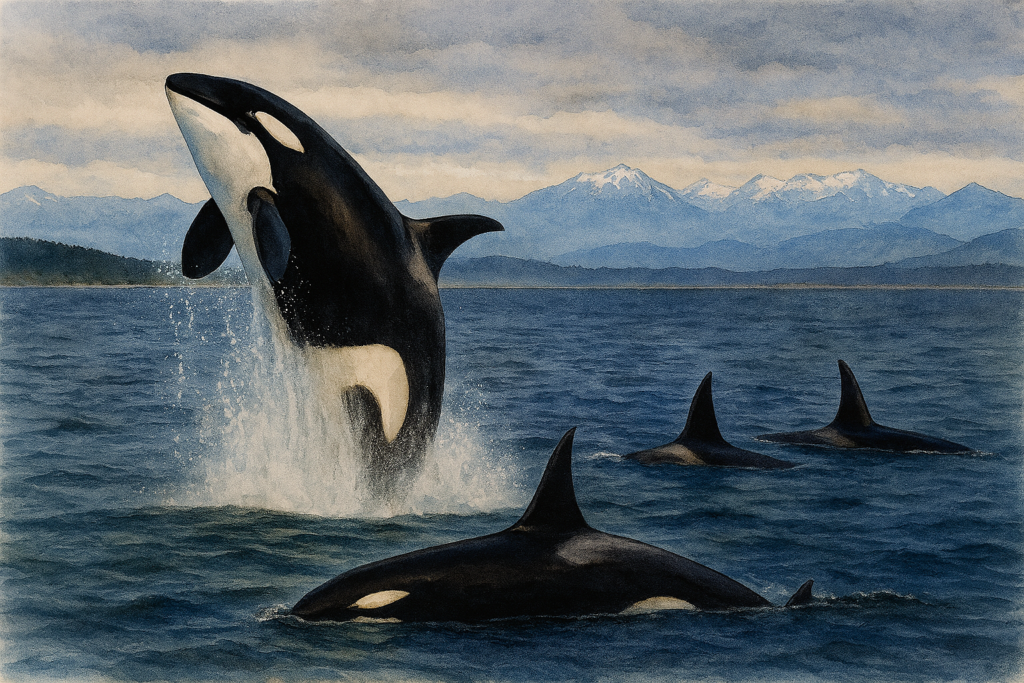
Four dorsal fins surfaced off the port side, tall and deliberate. Orcas. The engines dropped to idle, and the captain’s voice lowered as he explained what we were seeing. These were transient orcas, hunters. We stayed still as the pod spread out, each animal moving with a purpose that felt calculated rather than chaotic.
The hunt unfolded slowly.
An older female surfaced first, then disappeared beneath the water. Moments later, a sea lion broke the surface in panic, gasping and twisting, before slipping back into the swell. The female orcas did not rush. They surfaced and dove again, corralling rather than striking, herding the sea lion away from escape routes. At times it looked almost playful, but there was nothing casual about it. This was instruction. This was skill being exercised.
A younger male orca circled wide, his dorsal fin cutting a steady arc through the water. He didn’t engage directly. His role was containment, blocking any chance of flight toward open water. Again and again, the sea lion tried to break past him, only to turn back toward the waiting females.
The hunt went on far longer than I expected. Minutes stretched. The water churned, then went still. The sea lion surfaced again and again, each time more exhausted. No one spoke on the boat. Cameras stayed lowered. It didn’t feel right to document something this intimate, this old.
When the end came, it was swift, almost merciful in its decisiveness. A surge of white water, a final movement, and then stillness. The orcas lingered briefly, surfacing in turns, before moving on as calmly as they had arrived.
The ocean reset itself almost immediately.
We stayed out longer, eventually spotting humpbacks farther offshore, their blows rising pale against the horizon. But the mood had shifted. The experience had weight. It reminded me of watching predators work in Alaska, of learning early that wild places don’t soften themselves for our understanding. They just are.
Practical Notes for the Trip
If you’re considering a whale-watching tour out of Port Angeles, here’s what’s worth knowing:
Puget Sound Express departs from the Port Angeles Wharf (115 E Railroad Ave) and typically runs May through October. Tours last about three to four hours, with check-in required 30 minutes before departure. Boarding closes 15 minutes prior, and punctuality matters.
The boats are well-equipped for cold conditions, with heated indoor seating, outdoor viewing decks, restrooms, and onboard naturalists. Snacks and hot drinks are available, and the crew is knowledgeable without being intrusive.
Dress for wind and spray, even on calm days. Waterproof layers, gloves, and a hat are worth the extra effort. Motion sickness is common in these waters, so plan accordingly.
Most importantly, choose operators like this one that follow strict wildlife-viewing regulations. Engines stay low, distance is respected, and the animals set the pace.
Returning to Shore
As we turned back toward Port Angeles, the coastline came into focus again, dense forest meeting dark water without compromise. Olympic National Park from the sea feels uncompromising and honest. There’s no performance here, no guarantee of comfort.
I stepped off the boat quieter than when I boarded. Grateful, but grounded. Seeing the orcas hunt wasn’t something I had hoped for, exactly, but it was something I needed to witness. A reminder that wild places are not preserved because they are beautiful. They are protected because they are powerful, and because they operate by rules older than we are.
And sometimes, if we’re lucky and patient enough, they let us watch.