

Topkapi Palace sits at the edge of Istanbul where water gathers on three sides. The Bosphorus, the Golden Horn, and the Sea of Marmara meet below its walls, and the city presses close behind it. From this position, the palace feels less like a monument and more like a threshold between empire and city, land and water, past and present.
Constructed in the fifteenth century after the Ottoman conquest of Constantinople, Topkapi served as the administrative and ceremonial heart of the Ottoman Empire for nearly four hundred years. Unlike European palaces that centralize power within a single monumental structure, Topkapi spreads outward. It is composed of courtyards, pavilions, and gardens, a layout that reflects an imperial philosophy rooted in hierarchy and procession rather than spectacle.
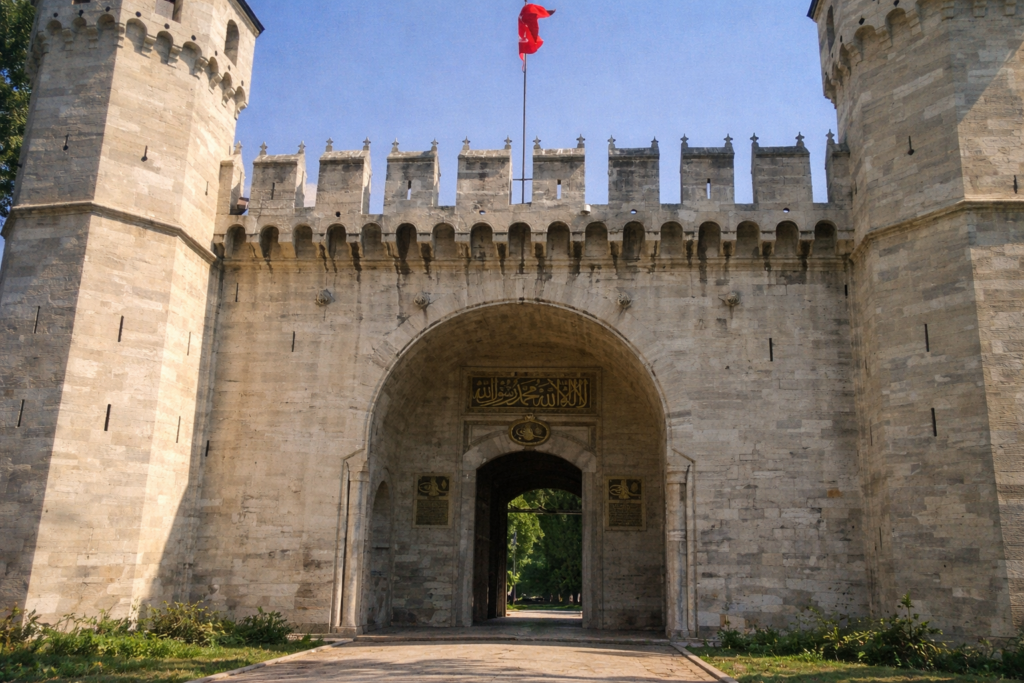
Passing through the Imperial Gate, the first courtyard opens wide and public. Once filled with soldiers, craftsmen, and court workers, this space establishes a sense of openness that feels almost disarming. The scale is generous, the ground expansive, and the atmosphere calm. Yet the architecture is already at work, guiding movement and preparing you for what lies ahead.
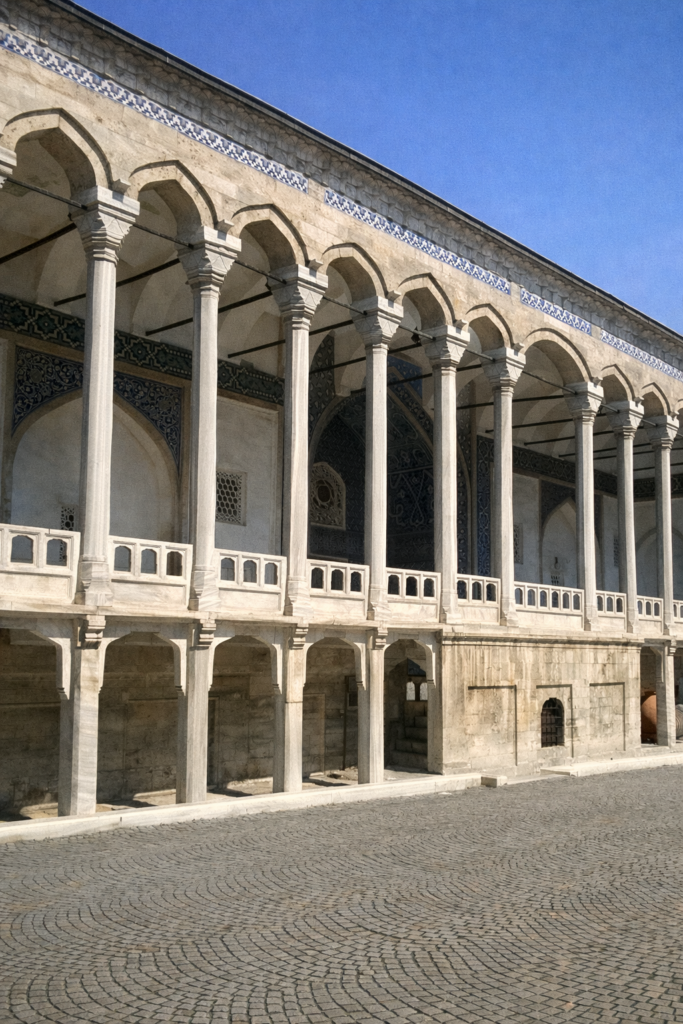
The second courtyard introduces order and discipline. Administrative buildings line the space, including the Imperial Council chamber, where affairs of state were once debated beneath domed ceilings. Arcades create rhythm and repetition, reinforcing the idea that power here was structured and procedural. This courtyard feels balanced and composed, a place where authority was exercised through routine rather than display.
Beyond this point, access narrows. The Third Courtyard marks a clear transition from public authority to private domain. This is where the sultan lived, educated his heirs, and safeguarded the most sacred and valuable objects of the empire. The scale contracts noticeably, and the architecture becomes more inward. Rooms gather around smaller courts, emphasizing enclosure, separation, and control.
The Imperial Treasury reveals wealth, but not extravagance in the European sense. Jeweled swords, ceremonial objects, and relics are presented with restraint. The architecture supports this narrative, allowing symbolism and history to carry the weight rather than ornament or scale.
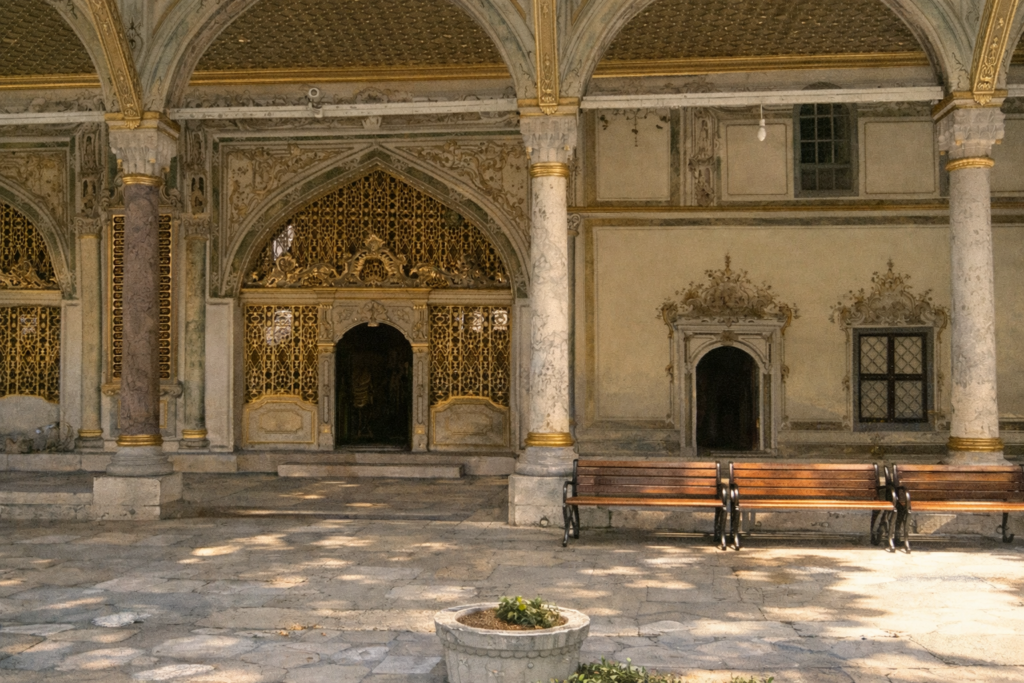
The Harem, often misunderstood, is among the most architecturally sophisticated parts of the palace. It is not a space of indulgence, but of regulation and hierarchy. Narrow corridors, layered thresholds, and carefully controlled light shape daily life within its walls. Privacy is architectural, enforced through layout rather than barriers.
Throughout the palace, ornament and structure are inseparable. Iznik tiles, carved stone, and calligraphy reinforce surfaces, frame transitions, and guide the eye without overwhelming the space. Views outward toward the Bosphorus and the Golden Horn punctuate the experience, offering moments of release after enclosure. These glimpses of water remind you again of the palace’s strategic position and its relationship to the wider world.
What lingers most at Topkapi is its sense of duration. This is not a palace designed for a single moment of display, but for centuries of governance. Its architecture absorbs time, ceremony, repetition, and quiet control. Power here is expressed through distance, sequence, and patience.
Leaving Topkapi Palace, the city reasserts itself quickly. The sound of Istanbul returns, movement accelerates, and the water that once framed the palace now carries boats, voices, and daily life. Standing again at the edge where land meets sea, it becomes clear that Topkapi was never meant to dominate its setting. It was meant to oversee it, occupying a threshold where architecture mediated empire and environment, holding power not through monumentality, but through measured restraint.