

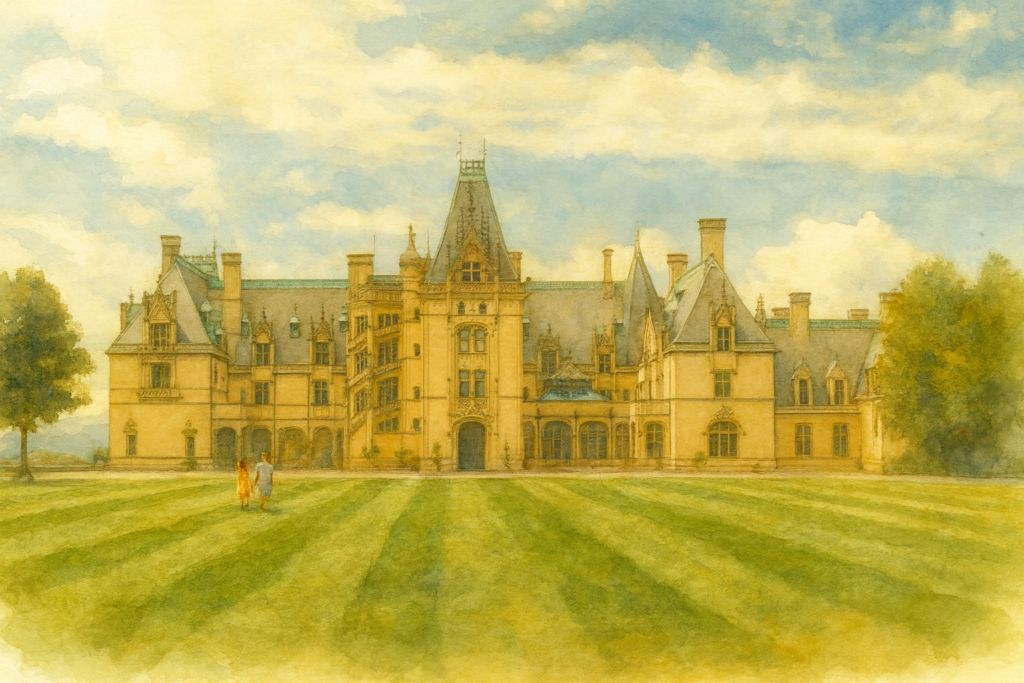
Visiting the Biltmore feels like stepping into a vision realized, where architecture, artistry, and ambition meet on an almost unimaginable scale. Built by George Washington Vanderbilt II in the late nineteenth century, the house rises from the hills of Asheville as both a residence and a declaration. Designed by Richard Morris Hunt, the Biltmore draws from French Renaissance precedents while asserting itself as distinctly American in its size, confidence, and relationship to the land. From the long, wooded approach to the limestone façade, the house announces that it was built not only to impress, but to endure.
Inside, the grand hall immediately sets the tone. A sweeping stone staircase rises beneath soaring ceilings, surrounded by intricate plasterwork and carefully curated art. Light glances off polished surfaces, drawing the eye upward and outward, emphasizing verticality and scale. The space is undeniably theatrical, yet it also functions as the organizational heart of the house, orienting visitors and signaling the careful planning behind the grandeur.

The public rooms unfold with a sense of rhythm and restraint. The drawing rooms are richly detailed but thoughtfully proportioned, designed to encourage conversation rather than overwhelm it. Tall windows flood the rooms with light, illuminating gilded moldings, layered textiles, and carefully placed works of art. The library offers a notable shift in tone. Lined with carved wood shelves and leather bound volumes, it feels quieter and more inward, a space that reflects Vanderbilt’s intellectual curiosity and belief that knowledge belonged alongside luxury.

The dining room leans into ceremony. Its scale, detailing, and vaulted ceiling frame the long mahogany table like a stage set, suggesting evenings defined by ritual, conversation, and duration. This is architecture designed to support social life, where formality and comfort coexist, and where the act of dining becomes an event in itself.

Upstairs, the bedrooms reveal a softer expression of grandeur. Decorative plaster ceilings, elegant furnishings, and carefully chosen fabrics create spaces that feel private and composed. These rooms are less about display and more about retreat, offering a glimpse into daily life behind the formality of the public floors. Nearby, the music room reflects the family’s commitment to culture and the arts, its proportions shaped as much by acoustics as by ornament.
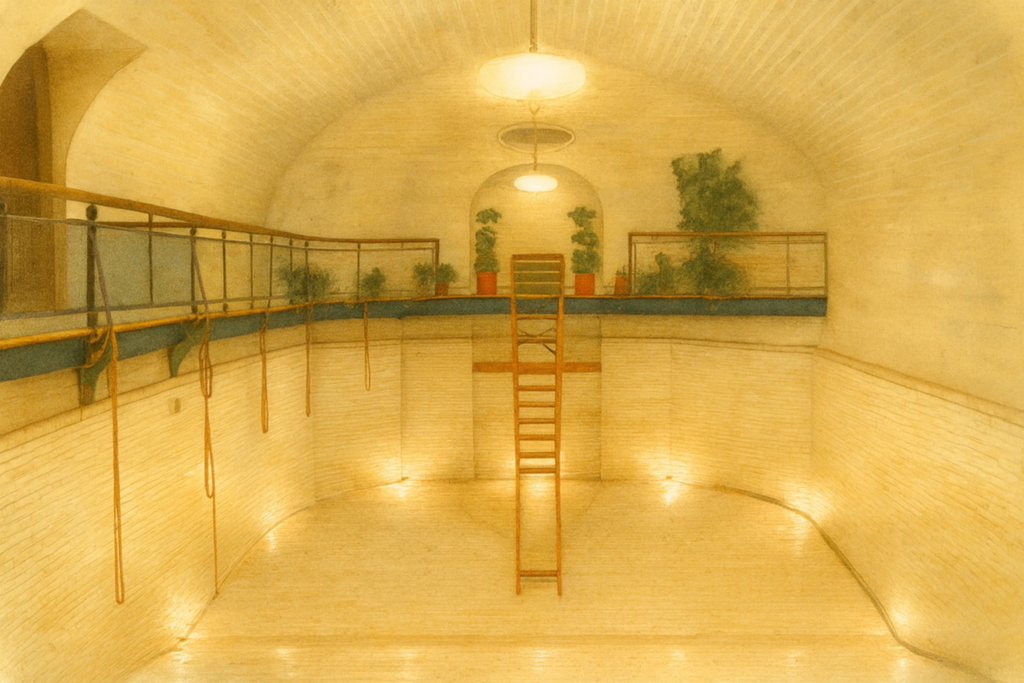
One of the most surprising spaces in the house is the indoor swimming pool, tucked deep within the mansion and entirely without windows. Lined in pale tile and capped with a vaulted ceiling, the room feels almost monastic, lit originally by electric light rather than daylight. Its inward focus sets it apart from the rest of the house. This is not a space meant for spectacle, but for private indulgence, a reminder that the Biltmore was as much about personal comfort and innovation as it was about public grandeur.
Even the service spaces reveal a remarkable level of design intelligence. Kitchens, corridors, and servants’ quarters are seamlessly integrated into the house, supported by hidden stairways and systems that allowed the estate to function efficiently without interrupting its elegance. Hunt’s ability to balance beauty with practicality is evident throughout, underscoring the house’s sophistication beyond surface ornament.
Outside, the estate unfolds across acres shaped by Frederick Law Olmsted. Formal terraces give way to rolling lawns, gardens, and forested paths that feel intentionally composed yet organic. The landscape is not a backdrop but a partner to the architecture, reinforcing the idea that the Biltmore was conceived as a complete environment rather than a singular object.
Throughout the house and grounds, the idea of growth and legacy feels ever present. Vanderbilt’s vision began as a seed of inspiration, and through care, patience, and ambition, it grew into something monumental. The Biltmore stands as evidence of what deliberate cultivation can achieve, not only in architecture, but in the shaping of a lasting legacy.
Leaving the Biltmore, I carried more than the memory of limestone walls and carved staircases. I carried the story of architecture as a vessel for aspiration, of spaces that balance artistry with purpose and elegance with function. Every room, every corridor, every carefully considered detail seemed to echo the same quiet truth. Greatness often begins small and, with patience and care, grows into something enduring.