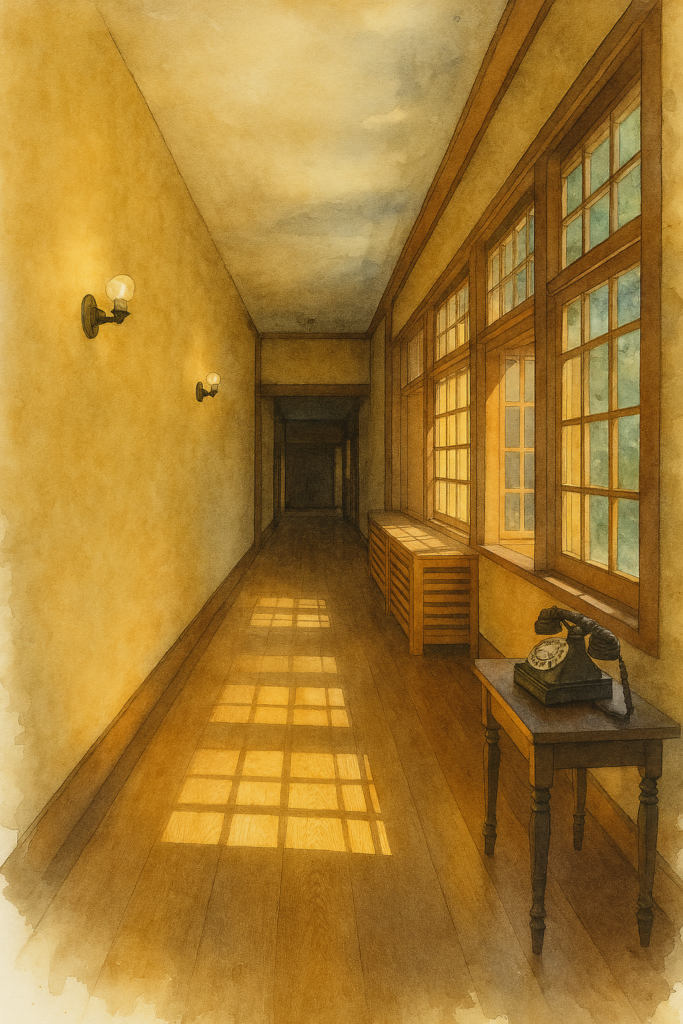

Graycliff does not announce itself in the way a mansion might. Approaching from the winding drive, the house appears almost suspended between hillside and river, as if it emerged naturally from the landscape rather than being placed upon it. Even the drive is part of the experience. A small channel of water runs beneath the portico, feeding a pond nearby, a subtle reminder that Wright’s design begins long before you reach the front door. Every element, from the driveway to the terraces above, is shaped by the surrounding land, and each feature has a purpose both practical and poetic.
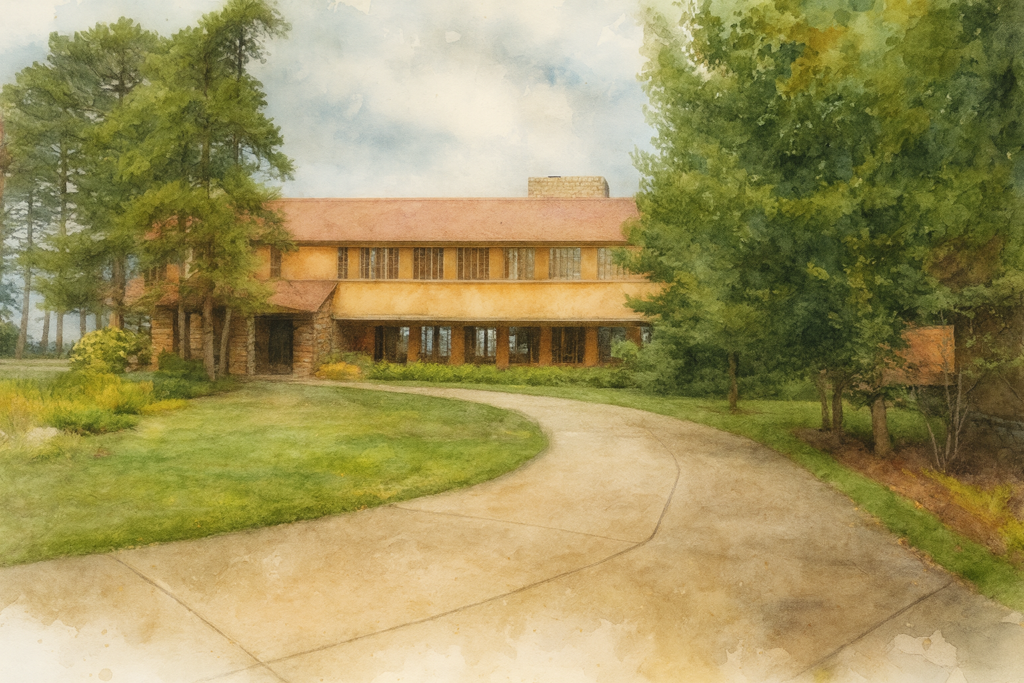
The house sits on a bluff overlooking Lake Erie, its horizontal lines and broad terraces echoing the lake’s expanse. Wright’s use of cantilevered decks, natural stone, and local materials allows the building to feel simultaneously anchored and expansive. Graycliff is carefully composed around the principles of compression and expansion. Low ceilings, narrow passageways, or framed entrances create moments of compression that heighten anticipation. Upon stepping into the adjacent living room or onto a terrace, the space opens fully, and the effect is intensified. The experience of moving through the house becomes an orchestrated rhythm, alternating between intimacy and release, reflection and exhilaration.
Inside, the sequence of rooms follows Wright’s principle of organic architecture. Large windows frame views of the lake, drawing the landscape inward and dissolving the boundary between inside and out. Built-in furniture and integrated shelving reinforce a sense of cohesion, where every element is intentional. The living room, with its open plan, high ceilings, and expansive terraces, exemplifies expansion, creating a sense of freedom and connection to the landscape, while corridors and smaller rooms act as compressive prefaces that make each expansive moment more profound.
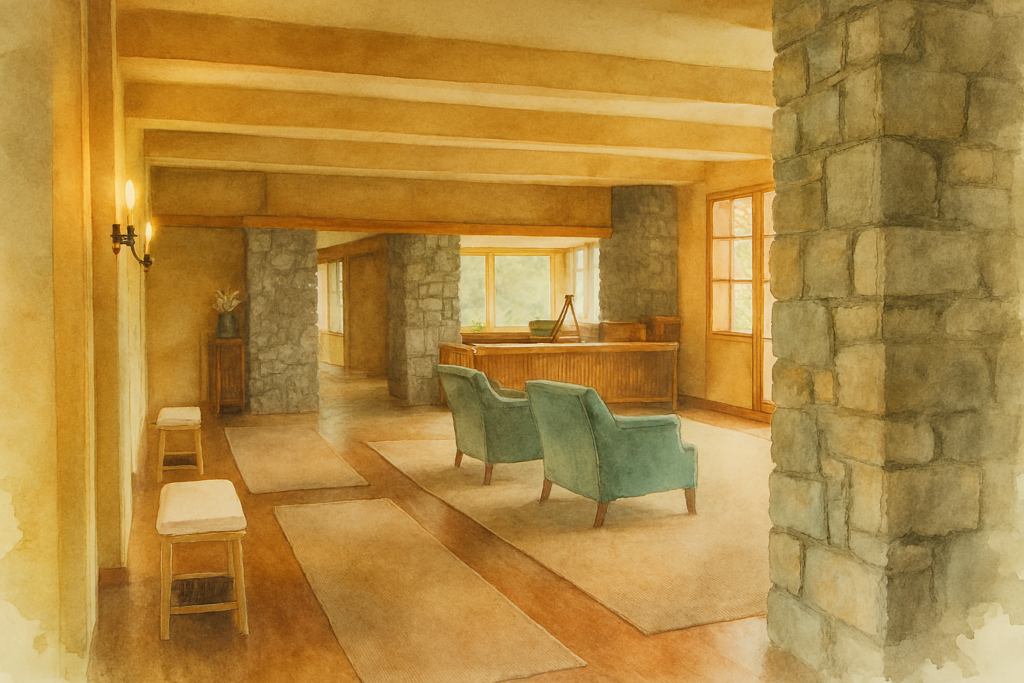
The dining room and kitchen continue this dialogue between function and form. Wright’s design ensures that circulation flows naturally, allowing the family to inhabit the house with ease while still feeling the architecture’s presence in every movement. Light filters in from clerestories and skylights, emphasizing texture, material, and proportion rather than ornamentation.
Upstairs, the bedrooms and private spaces maintain this balance of comfort and clarity. Wright’s attention to spatial hierarchy is evident: intimate rooms feel secure without confinement, and each view, window, and doorway is carefully oriented toward landscape or light. Even the smallest details, from built-in cabinetry to door hardware, reinforce the principle that architecture and daily life should be inseparable.
Outside, the terraces, gardens, and walkways continue Wright’s integration of house and site. Native stone walls, perennial plantings, and wide paths create a sense of extension, where outdoor living feels like a natural continuation of interior space. The pond, fed by the small water channel beneath the driveway, becomes part of this experience, a quiet punctuation in the landscape that echoes the lake beyond. Graycliff does not dominate its surroundings; it inhabits them, shaping the visitor’s experience of both land and structure, and reinforcing the feeling that compression and expansion govern how each outdoor and indoor space is revealed.
Visiting Graycliff, I carried more than the image of cantilevered terraces, clerestory light, or a pond reflecting sky and stone. I carried a story of architecture as environment, of design that privileges integration over display, and of a vision that places human experience within the rhythm of land and water. Wright’s house reminds us that architecture is not simply about shelter or beauty, but about connection—to landscape, to light, to movement, and to the life that unfolds within it.