

Standing on the terrace of the Vanderbilt Mansion, the Hudson River stretches wide and unhurried below, its presence inseparable from the house itself. This is a place shaped as much by orientation as by intention, where architecture responds to landscape rather than competing with it. The mansion does not announce its importance loudly. Instead, it reveals itself through proportion, placement, and the quiet confidence of a home designed to be lived in thoughtfully.
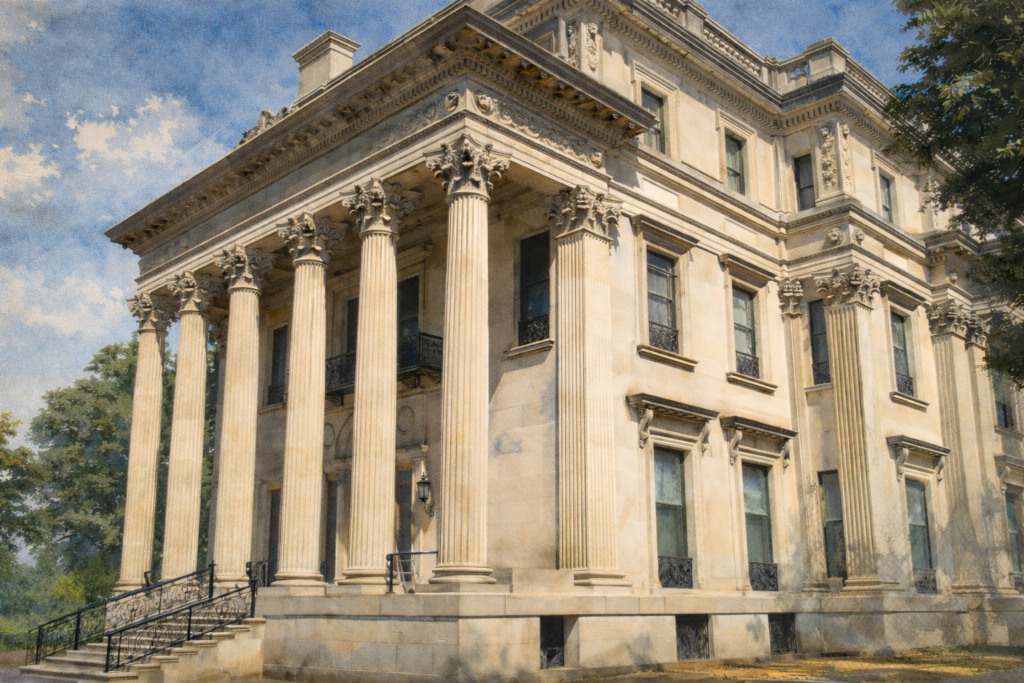
Built between 1896 and 1899 for Frederick Vanderbilt, the mansion reflects a more restrained expression of Gilded Age ambition. Designed by the firm of McKim, Mead & White, the house draws from classical European precedent while embracing a distinctly American sense of scale and openness. Perched above the river, the limestone façade feels grounded rather than imposing, its symmetry and detailing signaling permanence without excess.
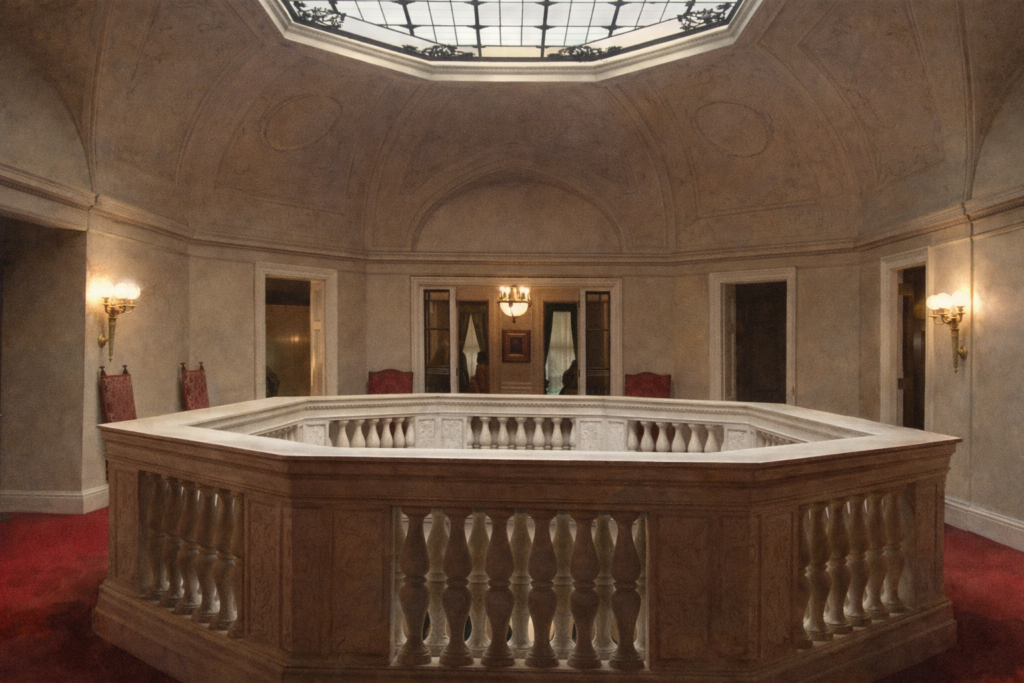
Inside, the sequence of rooms unfolds with clarity and purpose. The entrance hall establishes the tone immediately, anchored by polished wood floors and balanced proportions. Above, a large skylight draws daylight down into the center of the house, softening the interior and creating a subtle vertical connection between floors. The effect is both practical and poetic, allowing light to shape movement and atmosphere while reinforcing the house’s sense of order.
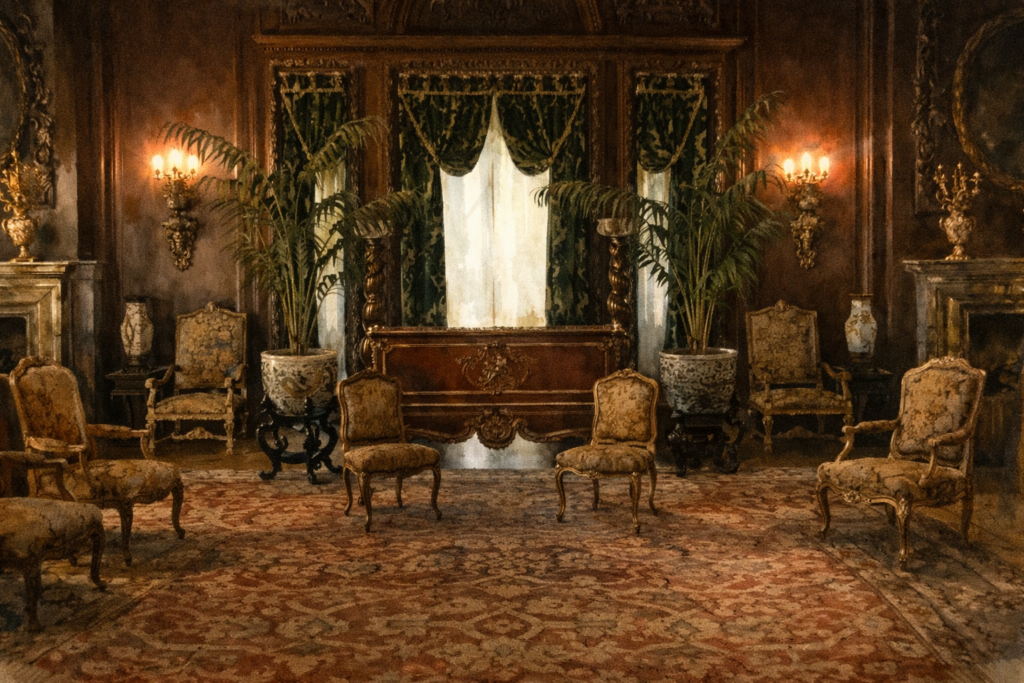
From the hall, the drawing rooms open toward the river, their tall windows admitting light that shifts throughout the day. Fabrics, furnishings, and decorative elements are refined but measured, allowing space and proportion to remain the dominant features. The architecture does not compete with the view. Instead, it frames it, reminding you again and again of the landscape beyond the walls.
The music room offers a particularly compelling balance between elegance and intimacy. High ceilings and restrained ornamentation give the room presence, while its scale encourages gathering and listening rather than performance alone. It is easy to imagine evenings shaped by conversation and sound, the room serving as a composed backdrop to social life.
In the dining room, wood paneling and carefully detailed moldings introduce a greater sense of formality. The architecture reinforces the ritual of the meal, framing the table as a place of duration and exchange. Even here, the room remains composed and livable, a space defined by order rather than excess.
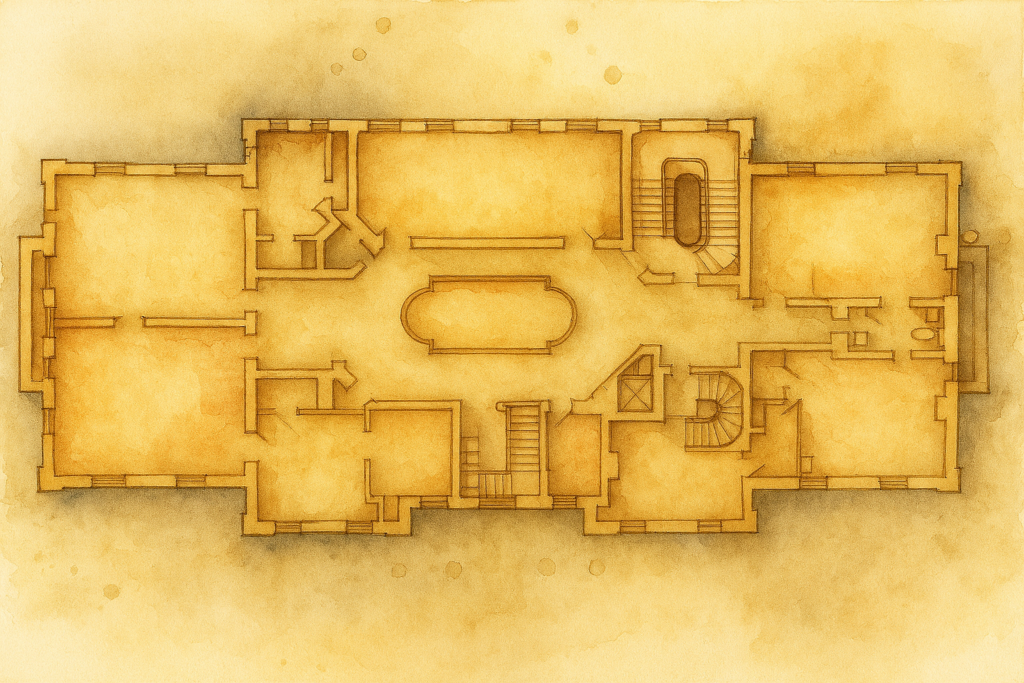
Upstairs, the bedrooms continue the dialogue between comfort and refinement. Light, color, and texture are handled with restraint, creating spaces that feel private and calm. These rooms reveal a quieter dimension of the house, one shaped by daily routines rather than public ceremony. The skylight below continues to register subtly, its presence felt rather than seen, reinforcing the idea that the house was designed as a cohesive whole.
Throughout the mansion, what stands out is the consistency of intention. Architecture here does not compete for attention. It guides movement, frames views, and establishes a rhythm that feels deliberate and natural. The relationship between interior and exterior remains constant, with light acting as the mediator between rooms and river.
Outside, the grounds extend this relationship further. Lawns, paths, and terraces unfold toward the Hudson, reinforcing the idea that the landscape was an essential component of the estate’s design. The river is not a distant backdrop but an active presence, shaping how the house is experienced from nearly every vantage point.
Leaving the Vanderbilt Mansion, the river remains in view, steady and unchanged. The house recedes gently behind it, having made its impression not through spectacle, but through clarity and restraint. What lingers is an understanding of architecture as a quiet mediator between people and place. In this setting, legacy is expressed through thoughtful design, through light drawn down from above and views carried outward, connecting interior life to landscape long after the era that produced the house has passed.