

Visiting The Breakers is stepping into a living monument, where architecture, history, and ambition converge. Built in 1895 for Cornelius Vanderbilt II, the mansion stands as a testament to the Gilded Age, when American industrial fortunes collided with European sophistication. The design, inspired by the grand palaces of the Italian Renaissance, was the work of Richard Morris Hunt, one of the era’s most celebrated architects. Every column, pediment, and cornice was chosen to convey permanence, taste, and power. The mansion rises four stories, anchored in limestone, with a copper roof that glints like green fire under the Newport sun—a deliberate nod to classical European elegance, yet unmistakably American in its scale and ambition.
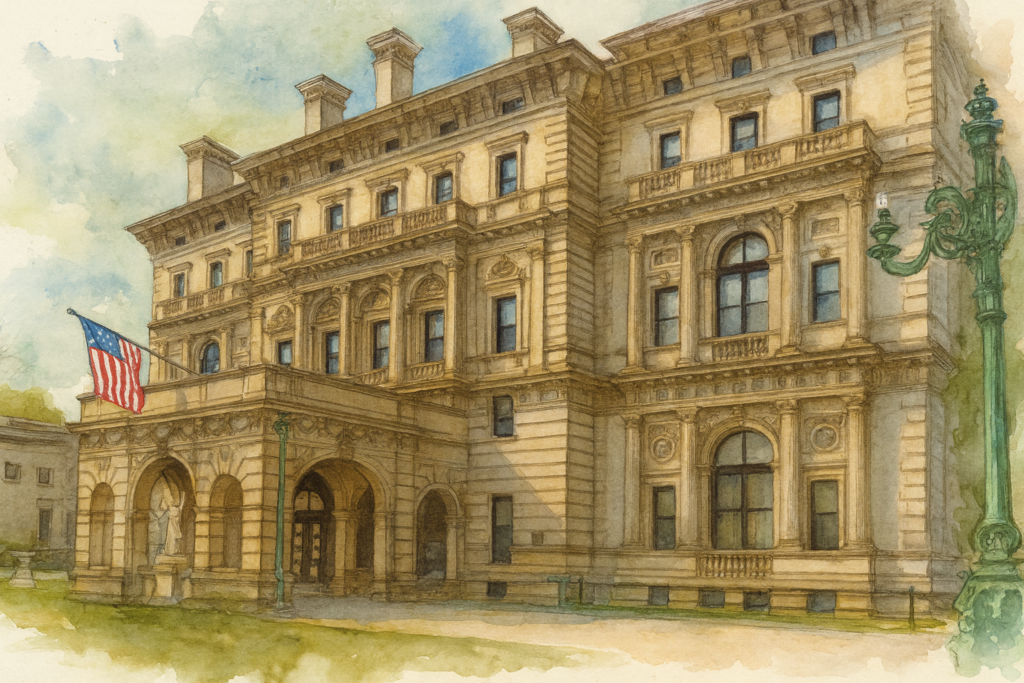
Approaching the front, the symmetry of the façade, punctuated by arched windows and ornate balustrades, draws your eye upward, as if the building itself is reaching for the sky. The grandeur is not merely decorative; it tells a story of wealth earned and asserted, of a family determined to make its mark. Step inside, and the Italian Renaissance influence continues: a grand hall dominated by a sweeping marble staircase with intricate balustrades greets visitors. The ceilings soar, adorned with plasterwork inspired by Venetian palaces, and gilded moldings catch the light from a massive crystal chandelier, scattering rainbows across the polished floors.
The rooms are masterpieces of both architecture and interior design. The drawing rooms are laid out to encourage movement and conversation, their proportions deliberate, ceilings high, windows tall and arched, flooding each room with natural light. The library, quiet and intimate, contrasts with the formal reception spaces, its paneled walls and coffered ceilings speaking to intellect and refinement. Even the dining room is a study in spatial drama: vaulted ceilings, decorative cornices, and the play of light on crystal and silver create a theater of conviviality, where architecture frames human interaction.

One of the most intriguing details woven throughout The Breakers is the recurring acorn motif, carved into woodwork, plaster, and ironwork in ceilings, staircases, and fireplaces. At first glance, it’s a decorative flourish—a tiny nod to nature amidst marble and gold—but its symbolism runs deeper. Acorns are, of course, seeds of potential, the promise of growth and strength, and their presence here feels almost like a quiet reflection of the Vanderbilt story: a family that began with humble beginnings and, through ambition and careful cultivation, grew into one of America’s most influential dynasties. Walking through the mansion, noticing acorns nestled in unexpected corners, I couldn’t help but think of them as reminders of legacy, resilience, and the idea that even the grandest achievements start with something small, waiting patiently to reach toward the light.
Upstairs, the bedrooms continue the theme of grandeur tempered by comfort. Ceilings are adorned with delicate plasterwork, floors polished to a soft sheen, and windows positioned to capture ocean light at dawn and dusk. Servants’ quarters, kitchens, and hidden stairways reveal Hunt’s genius for practical design alongside the theatrical. Each element—from hidden dumbwaiters to discreet ventilation—balances function with form, allowing the mansion to operate smoothly while maintaining its sense of elegance.
Outside, the formal gardens stretch to meet the Atlantic, structured yet responsive to the natural contours of the land. Fountains, terraces, and sculptures echo the mansion’s classical inspiration, while the wind carries the salt of the sea and the scent of clipped hedges.
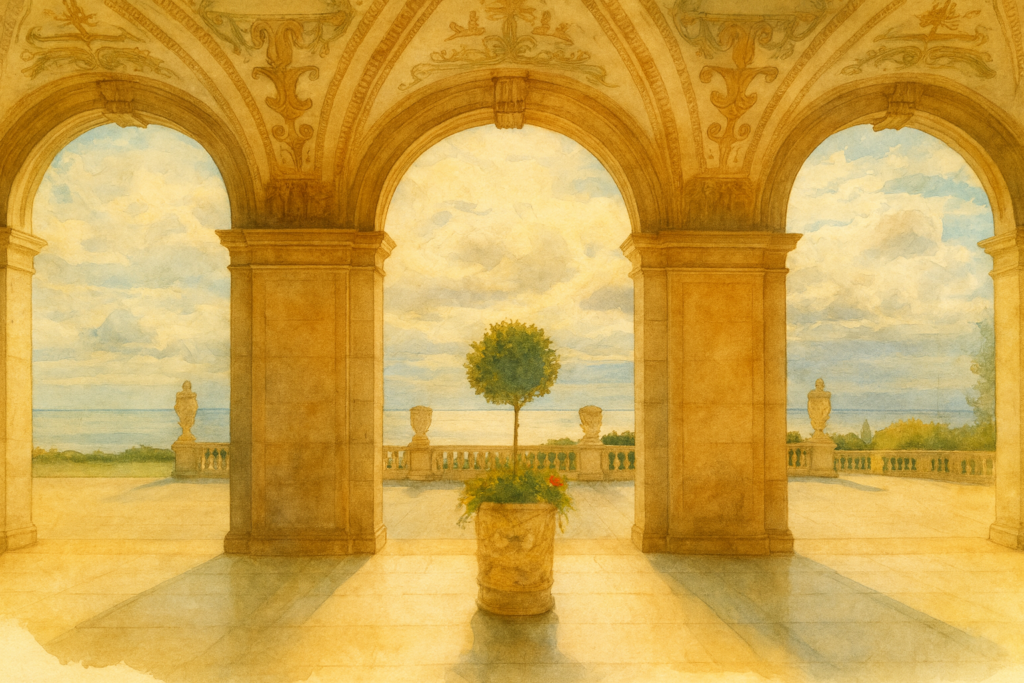
The Vanderbilt fortune sprouted from humble beginnings—a single ferry that, like an acorn, held the promise of something far larger. Over generations, that seed grew into empires of shipping, railroads, and influence. The Breakers stands as the acorn fulfilled: a mansion that embodies vision, ambition, and painstaking attention to detail, each column, ceiling, and gilded flourish a testament to growth nurtured over time. It is a legacy carved in marble and echoed in memory, a reminder that greatness often begins small, quietly gathering strength before reaching toward the sky.
Leaving The Breakers, I carried more than the memory of gilded ceilings or sparkling chandeliers. I carried the story of architecture as a vessel for ambition, a design that marries artistry with purpose, elegance with function. I carried the story of a family that, from modest beginnings, cultivated a legacy as enduring as the mansion itself. Every column, every carved detail, every deliberate proportion seemed to murmur the same truth. Greatness often begins small, like an acorn, and with patience, vision, and care, grows into something monumental.